The Multi-Framework Risk Assessment ISO 31000 and Beyond
The Multi-Framework Risk Assessment: ISO 31000 and Beyond
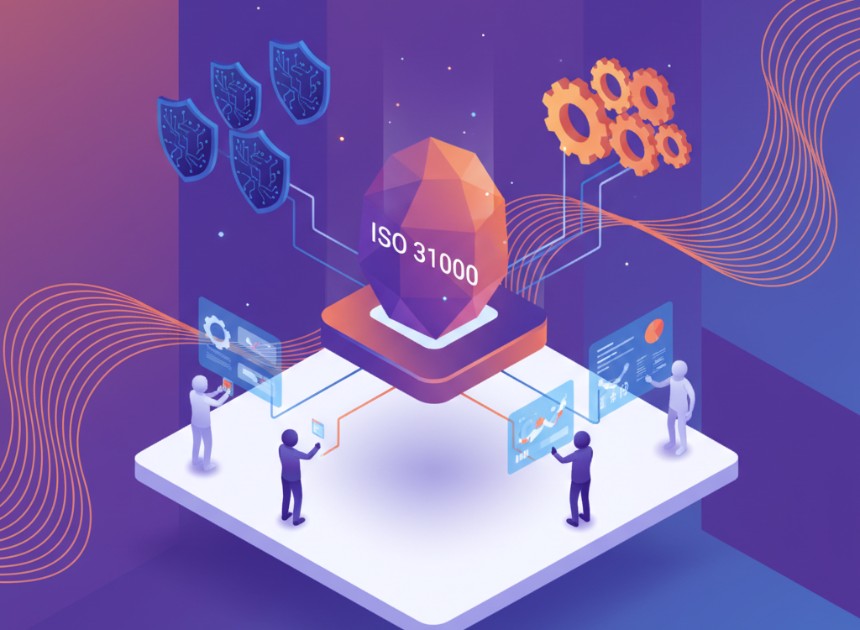
In the modern corporate landscape, business leaders are often buried under a mountain of overlapping compliance requirements. From the rigorous controls of ISO/IEC 27001:2022 to the specific mandates of PCI DSS 4.0, the sheer volume of risk reviews can lead to assessment fatigue and fragmented data. At iExperts, we advocate for a more sophisticated approach: the Multi-Framework Risk Assessment (MFRA). By using ISO 31000 as your foundational philosophy, you can satisfy stakeholders across the board with a single, high-level review.
The Core Philosophy: ISO 31000 as a Meta-Framework
ISO 31000 provides the principles, framework, and process for managing risk. Unlike technical standards, it is agnostic to the type of risk, making it the perfect 'umbrella' for a unified assessment. When we conduct assessments at iExperts, we leverage this neutrality to map technical requirements from other domains into a language that board members and executives understand.
- Contextual Alignment: Defining internal and external parameters before diving into technicalities.
- Iterative Process: Ensuring that risk identification, analysis, and evaluation are continuous rather than annual events.
- Value Creation: Focusing on how risk management contributes to the achievement of organizational objectives.
"Risk is not just a threat to be managed, but an opportunity to be understood through a lens of total organizational resilience."
Bridging the Gap: NIST CSF 2.0 and ISO 42001
With the release of NIST CSF 2.0, the focus has shifted heavily toward Governance. This aligns perfectly with the ISO 31000 mindset. Furthermore, as organizations begin to integrate Artificial Intelligence, the ISO 42001 (AI Management System) standard introduces unique risks related to algorithmic bias and data integrity. A multi-framework approach allows you to assess these AI-specific risks within the same workflow used for your standard cybersecurity posture.
- Unified Risk Register
- Cross-Framework Control Mapping
- Evidence-Once, Satisfy-Many Approach
Pro Tip
To maximize efficiency, utilize a Common Control Framework (CCF). By mapping specific controls from GDPR, PCI DSS, and ISO 27001 to a single master control, you can perform one technical test that generates compliance artifacts for all three standards simultaneously.
Conclusion: Moving Toward Strategic GRC
The goal of risk management is not to check a box, but to enable informed decision-making. By adopting a multi-framework risk assessment model, your organization moves away from reactive compliance and toward strategic governance. At iExperts, we help organizations build these bridges, ensuring that your risk posture is robust, transparent, and fully aligned with your business goals. It is time to look beyond individual standards and see the bigger picture of enterprise resilience.