BCP vs. DRP Knowing the Difference Saves the Business
BCP vs. DRP: Knowing the Difference Saves the Business
In an era of total digital reliance, the line between a minor technical glitch and a total business collapse has never been thinner. Executives often use the terms Business Continuity Planning (BCP) and Disaster Recovery Planning (DRP) interchangeably, but at iExperts, we know that confusing the two can lead to catastrophic gaps in your resilience strategy. While they share a common goal of protecting the organization, they operate on different scales and timelines.
Business Continuity: The Broad Horizon
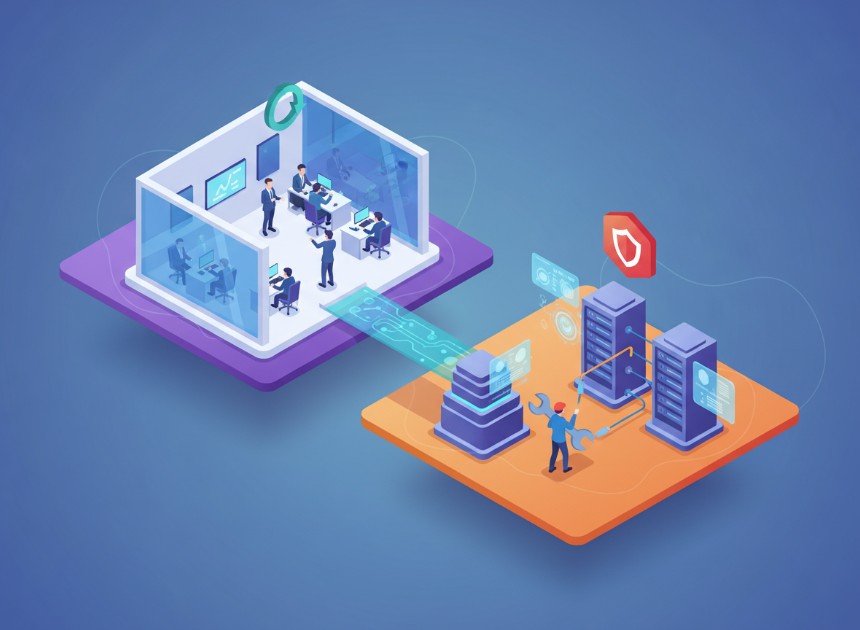
Business Continuity is the overarching strategy designed to ensure that business operations can continue with minimal disruption during and after a disaster. It is not just about IT; it is about people, processes, and communication. If your headquarters is inaccessible due to a flood, BCP dictates how your staff will work remotely, how you will communicate with clients, and how you will maintain your supply chain.
- Business Impact Analysis (BIA)
- Crisis Communication Plans
- Workforce Relocation Strategies
Disaster Recovery: The Technical Foundation
Disaster Recovery is a subset of BCP that focuses specifically on the restoration of technology infrastructure and data. When a ransomware attack encrypts your servers or a data center loses power, DRP is the technical playbook that engineers follow to restore systems. At iExperts, we emphasize that DRP is the engine room of resilience, focusing on data integrity and system availability.
- Data Restoration: Rebuilding lost or corrupted data from secure, off-site backups.
- System Failover: Switching operations to a secondary site or cloud environment.
- Network Recovery: Re-establishing connectivity for critical business applications.
"BCP ensures the business survives the event, while DRP ensures the systems that power the business are rebuilt to support that survival."
Pro Tip
When designing your recovery strategy, you must define your Recovery Time Objective (RTO) and Recovery Point Objective (RPO). These metrics determine how much data loss is tolerable and how quickly systems must be back online to prevent the BCP from failing.
The Unified GRC Approach
True resilience is achieved when BCP and DRP are integrated into a single Governance, Risk, and Compliance framework. Following standards like ISO 22301:2019 allows organizations to align their technical recovery with their business goals. iExperts works with leadership teams to bridge the gap between IT and the boardroom, ensuring that when disaster strikes, the response is synchronized, efficient, and decisive.