Cloud Outage Survival Multi-Cloud BCP in Practice
Cloud Outage Survival: Multi-Cloud BCP in Practice
The prevailing myth of the cloud is that it is an ethereal, indestructible force. However, as business leaders have learned through high-profile incidents, the cloud is simply someone else's computer—and those computers can fail. When a primary AWS or Azure region goes dark, the impact on global operations can be catastrophic. At iExperts, we advocate for a shift from simple redundancy to true Operational Resilience through multi-cloud Business Continuity Planning (BCP).
The Fallacy of Single-Cloud Redundancy
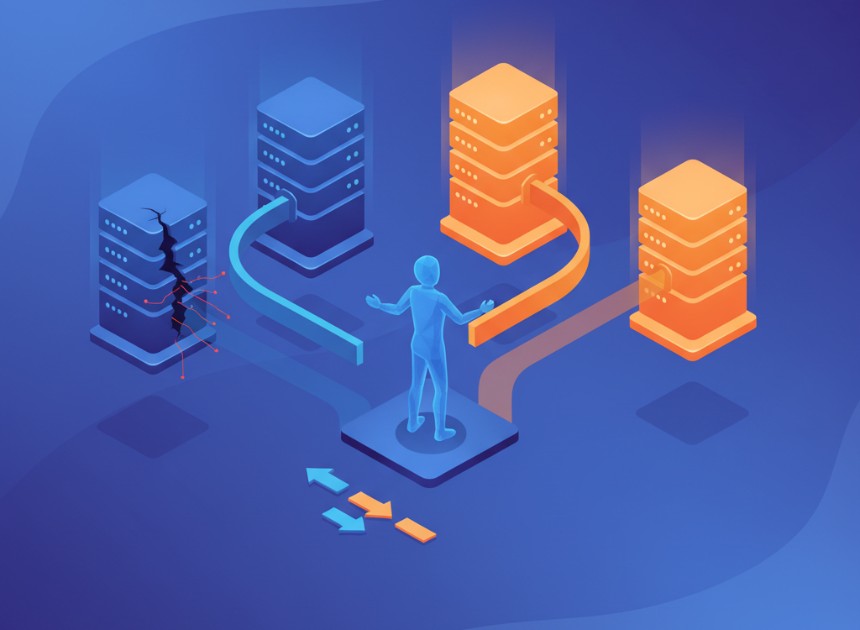
Many organizations believe they are protected because they utilize multiple Availability Zones (AZs) within a single region. While this protects against localized hardware failure, it offers no protection against regional control-plane failures or catastrophic environmental events. To align with NIST CSF 2.0 and ISO 22301, businesses must consider a strategy that spans across different cloud service providers (CSPs).
- Provider Concentration Risk: Over-reliance on a single vendor's API and infrastructure creates a systemic vulnerability.
- Interoperability Challenges: Data egress costs and proprietary services often trap businesses in a single ecosystem.
- Compliance Mandates: Standards like PCI DSS 4.0 increasingly demand proof of robust recovery capabilities that withstand provider-level outages.
Key Deliverables for Multi-Cloud Resilience
Achieving a seamless failover between diverse environments like Azure and AWS requires more than just duplicated data; it requires a synchronized governance framework. iExperts recommends focusing on these critical pillars:
- Infrastructure as Code (IaC) Standardization
- Real-time Data Synchronization
- Agnostic Identity and Access Management
- Automated Traffic Management
"In a multi-cloud environment, the greatest risk isn't the technology failing; it's the lack of a unified governance model to manage the recovery process when it does."
Pro Tip
When calculating your Recovery Time Objective (RTO), ensure you account for the 'warm-up' time of your secondary cloud environment. Many organizations realize too late that their standby database in the secondary cloud lacks the IOPS performance required to handle a full production load immediately upon failover.
Conclusion
Surviving a cloud outage is not about luck; it is about engineering. By implementing a multi-cloud strategy that adheres to ISO/IEC 27001:2022 principles, your organization ensures that a regional blackout is a minor configuration change rather than a business-ending event. The team at iExperts is ready to help you architect your path to true digital sovereignty.