Continual Service Improvement CSI The PDCA Cycle in Action
Continual Service Improvement (CSI): The PDCA Cycle in Action
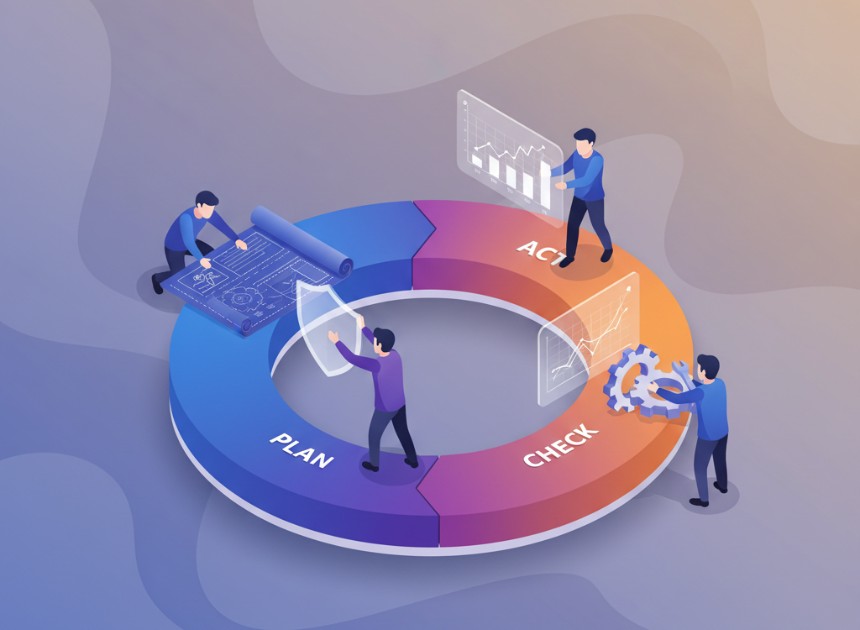
In the world of Governance, Risk, and Compliance, stagnation is the precursor to vulnerability. Many organizations treat security as a project with a defined finish line, but true resilience requires a shift toward Continual Service Improvement (CSI). At iExperts, we advocate for the Plan-Do-Check-Act (PDCA) cycle as the definitive engine for maintaining a modern security posture. This iterative four-step management method ensures that your controls remain effective against the ever-evolving threat landscape and stay aligned with standards like ISO/IEC 27001:2022.
Phase 1: Plan - Defining the Blueprint
The first stage involves establishing the objectives and processes necessary to deliver results in accordance with the organization's security requirements. This is where we identify risks and define the scope of the Information Security Management System (ISMS).
- Risk Assessment: Identifying assets and evaluating the potential impact of threats.
- Policy Development: Drafting the governing documents that dictate security behavior.
- Resource Allocation: Ensuring the budget and personnel are in place to support the strategy.
Phase 2: Do - Implementation and Operation
During this phase, the plans are put into motion. It is not merely about installing software; it is about embedding security into the organizational culture. iExperts emphasizes that technical controls must be paired with human-centric awareness.
- Deployment of Security Controls
- Employee Training and Awareness
- Incident Management Procedures
"The PDCA cycle is not a one-way street; it is a feedback loop that transforms reactive security into a proactive business advantage."
Phase 3: Check - Monitoring and Evaluation
How do you know if your controls are actually working? The Check phase involves monitoring and measuring processes against policies and objectives. This often involves rigorous internal auditing and the use of metrics defined by NIST CSF 2.0 to determine the effectiveness of the implementation.
Pro Tip
Always conduct a formal Gap Analysis before moving from the Check phase to the Act phase. This allows you to pinpoint exactly where the performance deviates from the expected standard, ensuring that your corrective actions are data-driven and targeted.
Phase 4: Act - Maturing the Posture
In the final stage, the organization takes action to continually improve process performance. If the Check phase identified non-conformities, the Act phase is where remediation occurs. This closes the loop and prepares the organization for the next planning cycle, ensuring that the security posture never becomes stale.
By partnering with iExperts, you ensure that your PDCA cycle is optimized for maximum efficiency, helping you navigate the complexities of modern compliance while fostering a culture of excellence.